If you haven't read Part 1 - Context, Discovery and Planning, I'd start there - it sets up everything that follows.
Phase 1 - Fixes & Quick Wins
The first part of the plan was to grab the low hanging fruit on the existing site, to give us time to progress the medium term plan. Essentially, identifying the problems and applying easy fixes. (Was supposed to be straightforward, but turned out to be surprisingly time consuming and fiddly.)
Claude proved super useful here, helping understand specific error messages and laying out options on the solutions.
- Learning a bit about Shopify and educating Steve on the functionality, what we can leverage, how to look after the inventory and stocklist, and the settings we can use.
- Photo rendering fix - found that some Shopify add-ons were causing extreme rendering issues. Took about 2 hours to debug the 10-year-old Shopify theme and legacy setup with Claude, and about 5 minutes to fix once we found the issue.
- Turning on click and collect - 5 minutes to set up, the harder part was recording a video with the farmer to announce it to his customers.
- Setting delivery boundaries - 5 minutes to set up delivery boundaries and test them, 50 miles radius from the shop.
Phase 2 - New Brand and Website
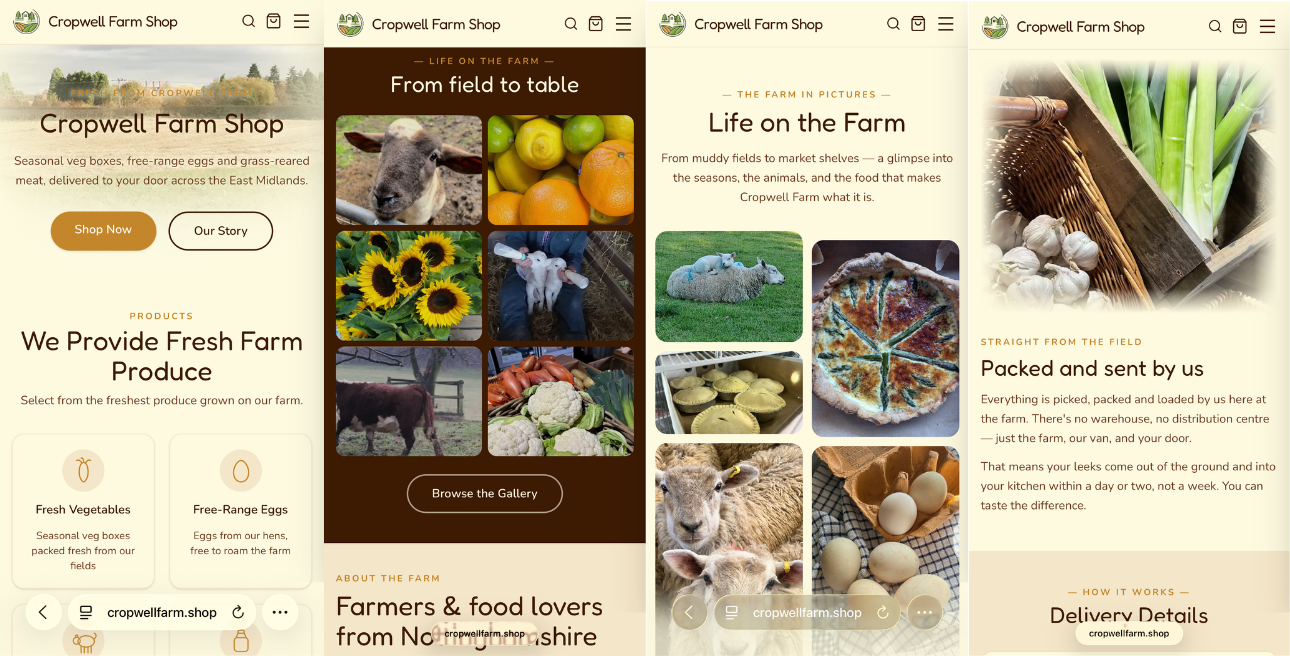
The new Cropwell Farm Shop site - four key pages built in Claude Code using Shopify Hydrogen.
New Website
Having got the old P&P website functionally working, we set about building a new website - Cropwell Farm Shop - using Claude Code, rather than the limiting and clunky themes in Shopify. Steve had had a number of problems with his Shopify storefront, and was keen to have it under our own control, despite wanting to keep the backend there.
To be honest, this was the easiest part - three four-hour sessions to build out the product pages, store, accounts pages, apply branding and styling, sitemap, SEO optimisation, deploy using Vercel, and associate DNS entries. Aligning to GDPR, creating the ability to delete an account and control preferences.
I don't need to tell you how awesome Claude is for stuff like this, you already know it. It was super rewarding to get proper results in a day or two though.
Preparing Content
The challenge here was that we wanted to present and highlight farm life - showing people what farm life is like - think Clarkson's Farm, but less polished.
My partner and I both spent a day or two on the farm, actually helping and getting involved, partly to lend a hand, partly to grab good natural footage of the actual action - sheep feeding and vaccinations, chicken feeding, sausage making, grabbing drone footage, riding in the tractor.
Clipping and captioning the footage - gosh, I feel for all the content creators out there, this was quite the effort (lucky I had some help from an Instagram Pro on this part) - taking 15 minutes plus of content and getting it down to 2-minute clips for socials, not easy!
Building Out the Brand
This was also quite a fun and rewarding part, and not something you do often in corporate life - choosing colours, logos, fonts, thinking about photo arrangements.
We opted for simple, clean, rustic, warm, earthy colours to match the feel of the farm and the shop - browns and dark mustards. We chose a green and orange logo to match.
The onsite days at the farm generated lots of colourful and warm photos and some video clips. Steve and Sarah also had some images from the farm which really represented farm life, so we opted to include a mosaic gallery.
One unforeseen challenge was the number of email templates which needed to be updated - Order Confirmation, Ready for Pickup, Order Collected, Cart Abandon reminders. All needed to be updated and tested, which was quite time consuming.
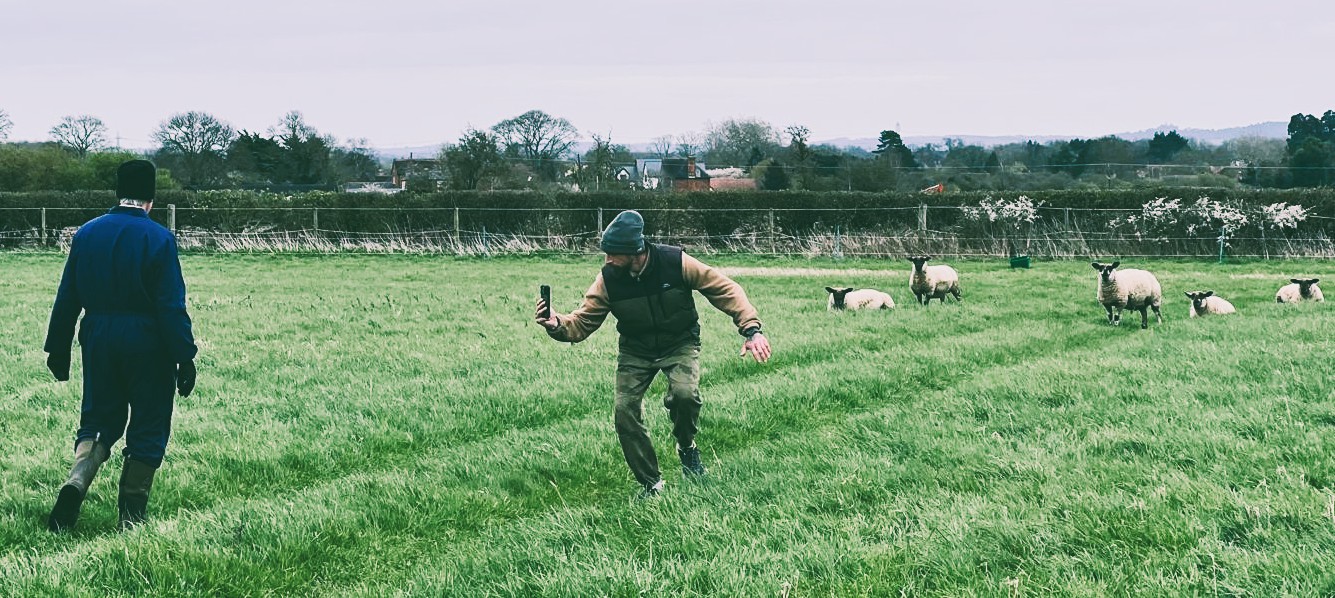
Filming Steve on the farm - turns out farmers make great content creators.
Switching it On - the Challenges
Cutover planning - more challenging than one would expect, in part due to the OAuth upgrade required and the implications for a seamless customer experience. We recorded a social media update to warn his customers the change was coming, and opted to leave the old site up for a week or so as a fallback option. We opted to only integrate Google/Facebook logins after the cutover to reduce the risk of interrupting customer accounts.
Go Live issues - Upon Go Live, we encountered a handful of small issues and 'P1 bugs' - an SSL cert auth bug on the 'www.' domain undermining confidence, incoming customer emails that would become FAQs, and hosting logistics and challenges around image optimisation. Nothing like some production issues to wake one up early on a Monday morning!!
Success - We were not prepared for how successful it would be, to be honest - we thought it would be small scale incremental visits, but what we actually saw was HUGE uptake and a huge number of visitors to the site. Whilst a good issue to have, it raised the jeopardy involved - this wasn't a quiet unused site - we actually had heavy traffic and lots of actual customers to care about.
A/B Testing - we spent a week or so comparing old website performance to new - orders, engagement, updating the FAQs to reflect real world queries we were seeing. We observed that we were still seeing a number of orders come into the old site, despite the social media announcements. We wanted to retire the old site, so this was a problem - Steve reached out to these customers specifically to advise them again of the switchover.
Retiring the old site - Once we had received a number of orders of different types on the new website, we worked on retiring the old P&P website. Retiring it cleanly was quite a hard challenge, particularly because the domain login details were unknown and lost - so after having removed all the Parsnips & Pears branding and references from email templates, and proven the new website was fully working, we simply switched it off.
Nothing like some production issues to wake one up early on a Monday morning. There is no better test of a product than real customers using it.
In the final chapter, we look at what happened after go-live - coaching a farmer into a content creator, measuring the results, and whether we actually hit our OKRs. Spoiler: some yes, some not yet. Read on...
Helping a Local Farm Shop - Mini Series